How DYNICS Is Empowering Utilities to Move from Reactive to Proactive Cybersecurity

On September 4, 2025 the inaugural Alabama Water Cybersecurity Summit, hosted by the McCrary Institute for Cyber and Critical Infrastructure Security, convened a broad coalition of water utility operators, municipal leaders, academic experts and industry-partners in Huntsville, Alabama. Conceived by DYNICS Regional Sales Leader Greg Jenkins and McCrary Cyber Research Engineer Jonathan Sherk, and then brought together by Sherk, the McCrary team along with assistance from a vendor committee, this event emphasized the essential yet fragile state of America’s water infrastructure.
As DYNICS continues to expand its offerings for OT cybersecurity and network resilience in the water & wastewater sector, this summit reinforced several key themes we see every day in the field. Below is a summary of the take-aways, how they align with the capabilities DYNICS brings, and how operators (despite tight budgets) can move from a reactive to a proactive posture.
1. The threat is real, widespread and growing
The McCrary Institute noted that “one in three water utilities experienced at least one cyber incident in the past year.” Additionally, a 2024 Enforcement Alert from the United States Environmental Protection Agency stated that over 70% of the systems it had inspected since September 2023 failed to meet basic security standards.
At the Summit, vulnerability of both legacy OT/SCADA infrastructure and modern IT systems were emphasized as key vectors.
For DYNICS customers in the water/wastewater domain, this means the “down-time risk” is no longer hypothetical: small, rural systems are just as likely to be targeted as large municipal utilities.
2. Since the Summit, the threat has become active in the field
Huntsville treated exposure as a question of when. The federal picture has since caught up. The FBI and the Environmental Protection Agency issued a joint public service announcement. It reports that malicious cyber actors are attacking internet-facing Programmable Logic Controllers in the water and wastewater sector and causing operational disruptions. Since 27 July 2026, water and wastewater utilities in at least seven states have reported incidents to the FBI. Some of that activity degraded water operations.
After reaching an exposed controller, the actors changed IP addresses and passwords, leaving operators with what the FBI describes as a loss of view and in some cases function. Reported effects included loss of pressure and flooding, and the agencies note that pressure loss could potentially allow untreated ground water to seep into pipes. The FBI names specific models in its announcement and adds that similar considerations apply to other branded PLCs.
CISA issued its own alert on 30 July 2026, reporting consequences that ran to boil water notices and sustained manual operation. Its asks are the ones we would start with.
- Take the controller off the public internet, and route operational remote access through a VPN or gateway rather than to the device itself.
- Enable password protection and replace default passwords.
- Allowlist the addresses permitted to connect, so access comes only from known engineering laptops or other critical OT assets.
- Keep a known clean backup of the PLC image.
The FBI and EPA add two more. Secure the cellular modems used for remote field connectivity with strong authentication and updates. Keep the ability to operate manually practiced and maintained.
3. The rules stalled while enforcement kept moving
That exposure sits on top of several unsettled years of rulemaking. In March 2023 the EPA issued a memorandum, “Evaluating Cybersecurity During Public Water Sanitary Surveys”, directing states to evaluate cybersecurity at public water systems as part of those surveys. A legal challenge brought a court hold that July, and the EPA withdrew the guidance in October 2023. Water sector associations turned instead to the Cybersecurity for Rural Water Systems Act, which would fund Agriculture Department cybersecurity experts to give technical assistance to rural water and wastewater systems.
Enforcement never paused. The EPA’s May 2024 Enforcement Alert set out how community water systems reduce cybersecurity vulnerabilities and comply with Safe Drinking Water Act Section 1433. It also stated that over 70% of the systems EPA had inspected since September 2023 were in violation of basic Section 1433 requirements. Inspectors found default passwords still in place, a single login shared by all staff, and former employees who kept their access.
Section 1433 applies to community water systems serving more than 3,300 people. It requires them to conduct Risk and Resilience Assessments, develop Emergency Response Plans, certify completion to EPA, and review both every five years. Since 2020, EPA has taken over 100 enforcement actions nationally for those violations.
Free help does exist. CISA, working with the EPA and state drinking water administrators, made a cybersecurity scan available to water utilities that identifies vulnerabilities and produces reports an operator can work from. EPA also notes that small systems are not immune, since disruptive attacks from adversarial nation states have affected water systems of all sizes. The systems with the most catching up to do are rarely the ones with a budget line for it.
4. Funding and resources remain constrained, especially for smaller utilities
One of the recurrent messages at the Summit: many water and wastewater systems operate under tight budget constraints and are challenged to secure dedicated cybersecurity funding.
In Alabama, some of the funding mechanisms (for instance the federal State & Local Cybersecurity Grant Program) were cited as available, but many utilities need assistance to navigate them.
For DYNICS, this aligns with what our sales team routinely hears: “We know we’re at risk but we don’t have deep resources for expensive solutions or dedicated cyber staff.” That’s why our message is geared toward cost-effective, scalable solutions and assessments that deliver early wins.
5. Proactive assessments and OT/IT network visibility are the foundation
One of the most consistent points made at the Summit: the importance of gaining visibility into what’s happening inside OT/IT networks, identifying legacy systems, segmenting networks, instituting access control and planning incident response, all before an event occurs.
For instance, the keynote from the Alabama CISO stressed practical steps utility leaders can take to “embed cybersecurity into operational culture.”
At DYNICS we believe this must start with a cyber-safety assessment: baseline what you have, where the risks are, how OT devices are speaking to IT systems and what legacy technologies might expose you.
6. Tailored solutions for the water sector
The Summit included break-out sessions focused on: securing legacy OT systems, mitigating ransomware risk, navigating regulatory/compliance complexity and leveraging emerging technologies such as AI for threat detection, all with budget pressure in mind.
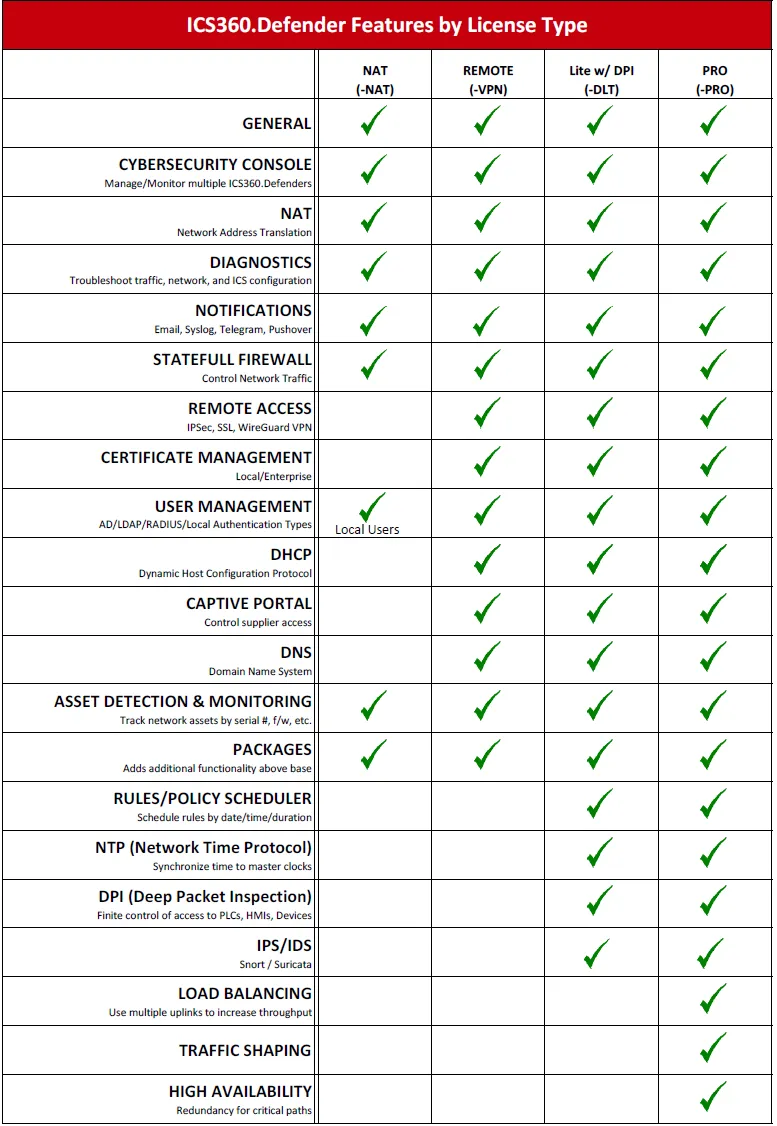
DYNICS offers a portfolio of OT-network and cybersecurity solutions that map well to this guidance: our ICS360 suite (ICS360.Defender, ICS360.DCC, ICS360.IAM) as well as OT network switches (ICS360.FlexConnect), and our service engagements for assessments, segmentation strategies and access control.
In the water/wastewater sector, we emphasize:
- Segmented OT networks that isolate SCADA/PLC infrastructure from general IT traffic.
- Identity and access management tuned for plant floor roles and contractors.
- Modular, “right-sized” solutions so smaller systems can implement incrementally rather than all at once, all or nothing solutions.
7. From reactive to proactive: shifting the mindset
Perhaps the clearest theme of the Summit: too many utilities wait until they are hit by an incident before acting, and by then the cost (financial, reputational, operational, public-safety) is already high. The Summit emphasized that taking proactive steps now is far less expensive and far more effective than dealing with the fallout.
From DYNICS’s vantage point, the “cost of doing nothing” is too high to ignore. Our recommended path: begin with a scoped assessment, develop a prioritized roadmap, implement foundational protections (network segmentation, identity control, monitoring) and rise from there.
Because we understand many municipalities and utilities have limited funding, our approach is modular: pick the highest-risk asset first, secure it, demonstrate value, then expand.
8. What comes next?
In partnership with Greg Jenkins and regional utility engagements, DYNICS is committed to following up the momentum generated at the Alabama Water Cybersecurity Summit. Our next steps include:
- Generating tailored content (video series/online resources) to small utilities on OT cybersecurity fundamentals.
- Aligning our ICS360 solution set and service offerings with grant-funding opportunities (so utilities can apply funds rather than bear full out-of-pocket cost).
- Building case studies in the water sector to show how segmentation + IAM + monitoring reduce risk and help meet basic standards.
We believe that by starting with a clear baseline, a prioritized roadmap and step-wise implementation, operators can shift from reactive post-incident mode to proactive risk-mitigation mode, and gain value from their OT/IT networks beyond just “compliance.”
Closing thoughts
The Alabama Summit underscored three truths that resonate strongly with DYNICS’s mission:
- Water infrastructure is a high-value target that must be protected
- Many systems are under-resourced, but they cannot wait for “perfect funding,”
- Visibility, segmentation, and identity-centric controls in OT/IT networks are the bedrock of security.
For utilities and municipalities, embracing a proactive stance, with a trusted partner can be the difference between an event and an outcome prevented.
At DYNICS, we are ready to partner with you, in assessment, in roadmap development, and in deployment of water-industry-tuned OT cybersecurity solutions. If you attended the Summit and want to explore next steps, please reach out to Greg Jenkins and our team.
Thank you to the McCrary Institute, Jonathan Sherk and all the Summit participants for elevating this dialogue at a crucial time for water infrastructure.
Together, we can turn insight into action and protect what keeps communities flowing.
Sources
- “Auburn’s McCrary Institute summit brings together cybersecurity leaders to help prevent attacks against water systems” – 256 Today
https://256today.com/auburns-mccrary-institute-summit-brings-together-cybersecurity-leaders-to-help-prevent-attacks-against-water-systems/ - “Alabama Water Cybersecurity Summit Tackles Escalating Threats to Critical Water Infrastructure” – Huntsville Commerce Report
https://www.huntsvillecommerce.com/alabama-water-cybersecurity-summit-tackles-escalating-threats-to-critical-water-infrastructure/ - “Malicious Cyber Actors Targeting Water and Wastewater Sector Internet-Facing Programmable Logic Controllers, Causing Operational Disruptions” – FBI and EPA
https://www.fbi.gov/investigate/cyber/alerts/2026/malicious-cyber-actors-targeting-water-and-wastewater-sector-internet–facing-programmable-logic-controllers-causing-operational-disruptions - “CISA Urges Water and Wastewater Systems Sector to Protect OT Against Activity Targeting PLCs” – CISA
https://www.cisa.gov/news-events/alerts/2026/07/30/cisa-urges-water-and-wastewater-systems-sector-protect-ot-against-activity-targeting-plcs - “Enforcement Alert: Drinking Water Systems to Address Cybersecurity Vulnerabilities” – U.S. Environmental Protection Agency
https://www.epa.gov/enforcement/enforcement-alert-drinking-water-systems-address-cybersecurity-vulnerabilities