A PLC (programmable logic controller) is a control system that reads inputs, runs its logic and writes outputs in a repeating cycle. An industrial PC (IPC) is a plant-floor computer for the work around that loop. Operator screens and data collection fit there, so the industrial PC vs PLC question is which jobs go on each device when the two work together.
The placement below rests on federal guidance, published standards and the trade press.
PLC, Industrial PC and Soft PLC Roles
- The PLC keeps machine logic and closed-loop control.
- An industrial PC takes operator screens, data collection and plant-system gateways.
- A soft PLC on an IPC is a later option for control, given a real-time operating system, planned patching and safety kept to its own standards.
Core Industrial PC vs PLC Differences, Side by Side
A conventional PLC can complete its cycle in as little as 1 millisecond, according to a 2025 review of PLC evolution by control systems professor Rene Simon. Cycle time matters in operational technology (OT), which the National Institute of Standards and Technology (NIST) describes in its OT security guidance as generally time-critical, with some systems requiring deterministic responses.
Dynics covers the IPC itself in its guide to what an industrial PC is. IEC 61131-1, from the International Electrotechnical Commission (IEC), says PLC functionality can run on a personal computer with industrial environment features.
| PLC | Industrial PC |
|---|---|
| Determinism | |
| Cyclic, with cycle times as short as 1 millisecond | Needs a real-time operating system. Desktop ones are nondeterministic. |
| Input/output (I/O) handling | |
| A core PLC function | Through the PLC, or directly as a soft PLC |
| Visualization | |
| Needs a separate human-machine interface (HMI) | Runs HMI software on a graphics display |
| Data handling | |
| Sends records to a data historian | Can host logging, gateway and web server roles |
| Operating-system patching | |
| Time-dependent code, so NIST defers to the vendor on security software | Each operating-system patch needs testing and a planned outage |
| Environmental hardening | |
| Intended for industrial environments (IEC 61131-1) | Varies by model, so ask for IEC 60068 and IEC 61131-2 results |
| Attack surface | |
| Exploited when left online with default passwords | Adds an operating system and services to harden |
| Lifecycle and parts availability | |
| OT equipment often serves 10 to 15 years, sometimes longer | Ask for a long lifecycle. Typical information technology (IT) parts last 3 to 5 years. |
Where Control, Screens, Data and Safety Should Run
NIST names control timing as a requirement people may not meet reliably, which is why controllers may be necessary. Where a PLC is the primary controller of a smaller setup, such as an assembly line, NIST describes mainly closed-loop control with minimal human involvement.
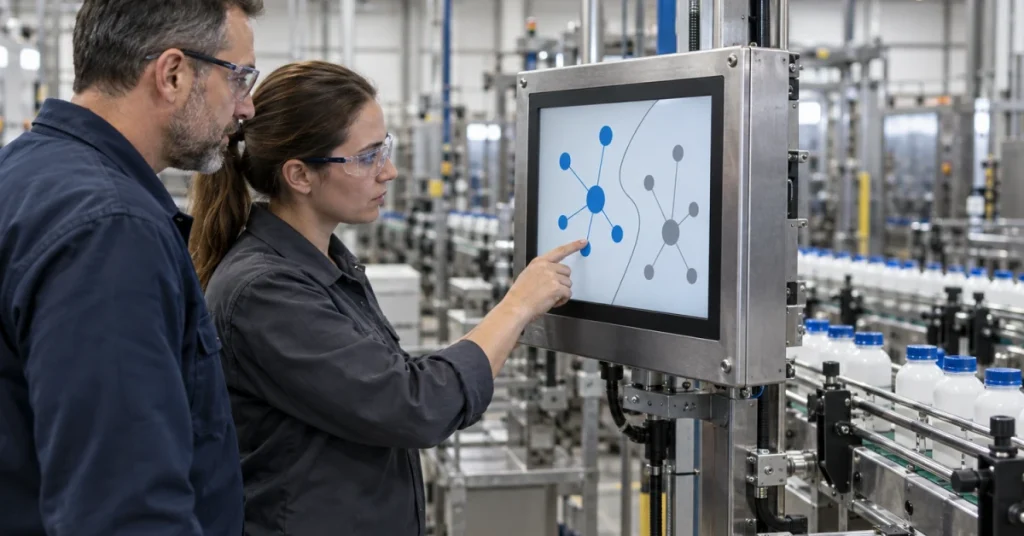
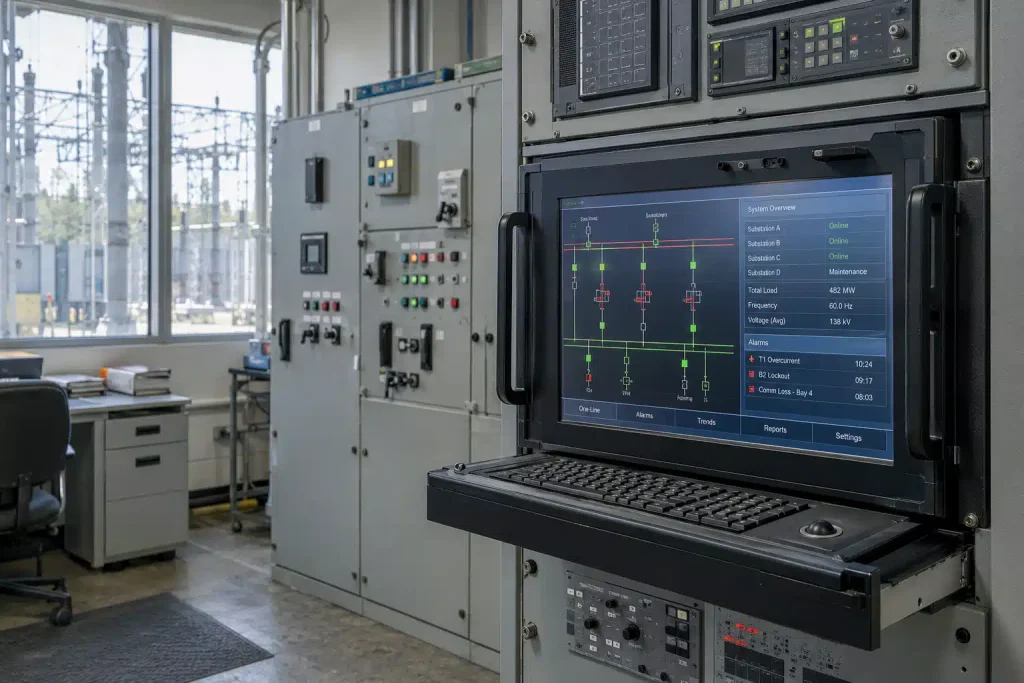
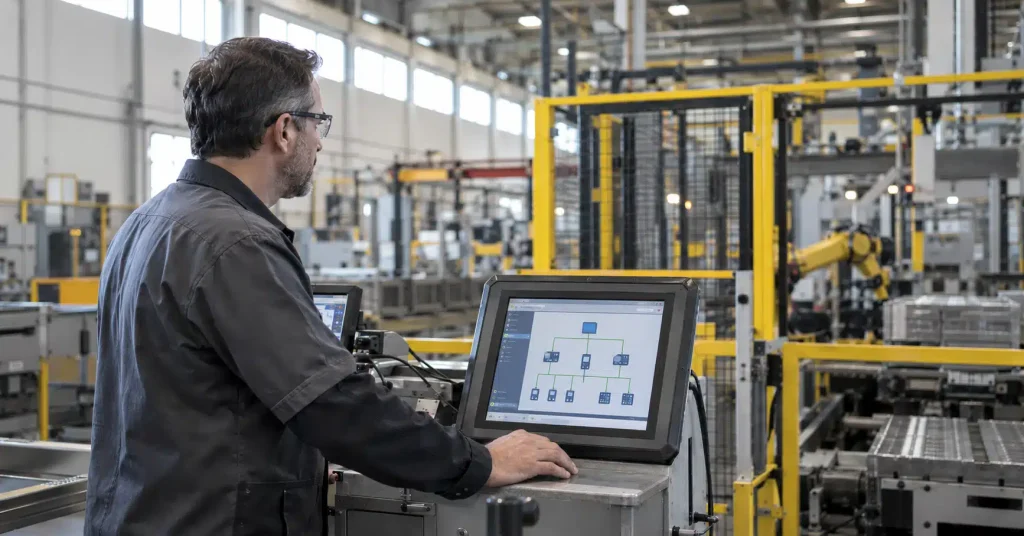
Operator screens belong to the computing infrastructure a plant floor increasingly needs beyond control logic. NIST’s HMI definition runs from a panel of buttons to an industrial PC with a color graphics display. The FlexPanel Pro is Dynics’ fanless, sealed HMI unit, and the company’s industrial PCs and workstations in its ThinManager-enabled devices line let a plant manage those screens centrally. An IPC can also host the data historian, or act as the gateway when diagnostic data is trapped in the PLC where the manufacturing execution system (MES) cannot get to it. ProViewDS, Dynics’ visualization software, includes a historian and native PLC communication.
IEC 61131-1 does not cover the functional safety of the overall system. IEC 61508 covers it for electrical and programmable systems, IEC 61511 for the process sector and ISO 13849-1, from the International Organization for Standardization (ISO), for machinery. NIST adds that a safety instrumented system is often kept independent of basic process control, and safety may call for physical rather than logical separation.
Hazardous locations decide the device by approval. Under Occupational Safety and Health Administration (OSHA) definitions, Class I, Division 2 includes areas where flammable liquids or gases escape closed systems only through accidental rupture, breakdown or abnormal operation. OSHA’s hazardous-location rules require a PC or PLC there to be intrinsically safe, approved or safe for the location, and approval must cover the specific gas or vapor as well as the class. Dynics offers hazardous-location industrial computers.
| Control task | Best-fit device | Why |
|---|---|---|
| Machine logic and closed-loop control | PLC | Deterministic cycles, primary controller in smaller setups |
| Operator screens | IPC or panel PC with HMI software | NIST’s HMI definition includes an industrial PC |
| Centrally managed operator stations | Thin-client IPC or HMI | Applications managed in one place |
| Data collection | IPC hosting a data historian | Centralized database for statistical process control |
| Getting PLC data to the MES | IPC as a gateway | Links networks with different implementations |
| Analytics at the line | IPC as an edge computer | Puts computing on the path from data source to cloud |
| Programming the PLC | IPC as an engineering workstation | NIST’s example PLC is programmed from one |
| Filtering traffic between segments | IPC as a network or cybersecurity appliance | Can pass only explicitly authorized traffic |
| Control, HMI and data in one box | IPC running a soft PLC | Needs a real-time operating system and planned patching |
| Safety functions | A system built to IEC 61508, IEC 61511 or ISO 13849-1 | Often kept independent of process control |
| Class I, Division 2 areas | Equipment approved or safe for the location | OSHA ties approval to class and specific gas |
Map Your Line Before You Buy Hardware
Bring your line’s task list, and a Dynics engineer will sort out which jobs stay on the PLC and which move to an IPC.
When a Soft PLC on an Industrial PC Can Be the Next Step
A 2022 article in InTech, the magazine of the International Society of Automation (ISA), defines a soft PLC as a software-based version of a PLC. The article’s case for it is consolidation, since one soft PLC can also serve as data logger, communications gateway and HMI.
Determinism is the old objection. Early soft PLCs ran on nondeterministic desktop operating systems, which convinced many engineers they could never replace a PLC. The InTech authors, one of whom works for a soft PLC runtime vendor, say real-time operating systems provide the determinism expected of a conventional PLC, though the article offers no test data. Simon calls cycle time the critical measure for every PLC type, and for a virtual PLC it includes network latency and jitter in both directions. PC-based control through a soft PLC can come later, once an IPC runs screens and data beside the PLC, a real-time operating system holds cycle time, updates fit planned maintenance windows and safety functions meet their own standards.
What to Check Before an Industrial PC Takes On Control-Side Work
A PC that rebooted mid-shift for an update is a fair reason for doubt. NIST calls rebooting a component usually unacceptable in OT because of availability requirements, and warns that a patch can change how the operating system works with control applications. Skipping patches is no answer, since NIST counts unpatched software among the greatest vulnerabilities. An IPC in a control role therefore needs updates tested by the vendor and plant and scheduled into planned maintenance windows.
Heat and dust resistance has a paper trail you can ask for. IEC 60068 defines reproducible tests for cold, dry heat, sinusoidal vibration and shock, and IEC 60529 rates enclosure protection against solid objects and water. IEC 61131-2 sets functional and electromagnetic compatibility tests for industrial PCs as well as PLCs. Dynics designs, fabricates and assembles its industrial computers for automation in Ann Arbor, Michigan, with fanless configurations across its small-format line that close the vent path to dust and moisture.
An industrial PC is not a commercial PC put into a metal enclosure. Beyond heat and dust, the plant floor sets requirements for mounting and display, which decide the form factor. Dynics builds industrial integrated workstations, industrial rackmount computers and the Xi Series compact industrial PC, which has no moving parts and ships with DIN rail and panel mount brackets. I/O, network connectivity and serviceability decide how well a unit fits the line and how it is maintained there.
Lifecycle is the quieter check. NIST puts typical IT components at 3 to 5 years, while OT equipment often stays in service 10 to 15 years, sometimes longer. For an industrial PC, specify a long product lifecycle and ask the vendor for its lifecycle and parts-availability commitment on the model you choose.
How to Secure an Industrial PC Running Beside a PLC
Each IPC on a control network adds an operating system, services and open ports to harden. NIST’s guidance points the same way, noting that OT increasingly uses industry-standard computers, operating systems and protocols, which leaves it far less isolated than earlier systems. PLCs are targets too. In December 2023, U.S. and allied agencies reported state-affiliated actors exploiting internet-accessible PLCs with default or no passwords, including at U.S. water and wastewater facilities.
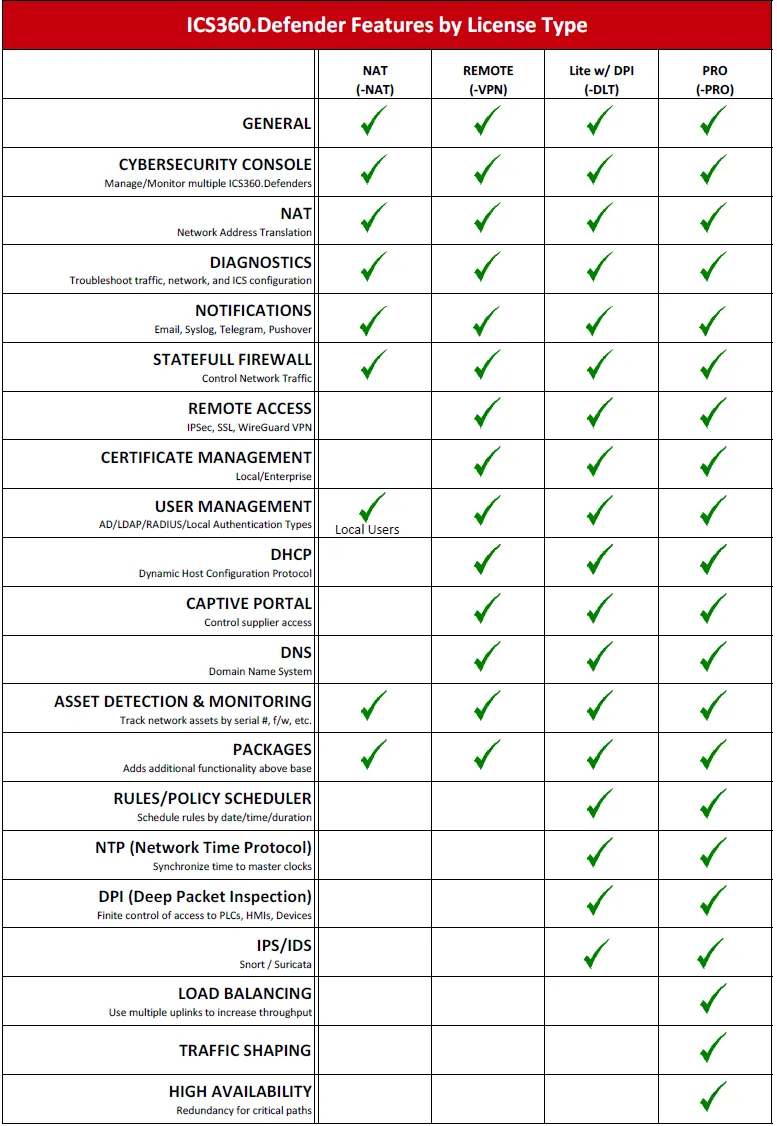
NIST’s advice fits both devices. Disable functions and services that operation does not require, without cutting a needed link such as PLC-to-HMI traffic, and limit each user’s privileges to the role. Dynics’ approach to OT cybersecurity denies communication by default and allows only required connections over a defined path, which protects even a legacy PLC without changing its configuration. An industrial PC can itself serve as a network or cybersecurity appliance on the plant floor.
Questions Engineers Ask About Industrial PCs and PLCs
What Is the Difference Between an Industrial PC and a PLC?
In any industrial PC vs PLC comparison, the PLC is the dedicated control system. It repeats one cycle of reading inputs, executing logic and writing outputs, with dependable timing. An industrial PC is a computer with industrial environment features that can host operator screens, data logging, gateways and a soft PLC on a real-time operating system.
Can an Industrial PC Replace a PLC?
In Dynics’ view, adding an industrial PC beside a working PLC does more for a plant than replacing it, since the two solve different problems. Technically, an industrial PC can replace one. IEC 61131-1 recognizes that a personal computer with industrial environment features can perform a programmable controller’s functions, which is what a soft PLC does. The PC then needs deterministic real-time software, a patch process built around scheduled outages and a separate plan for safety functions.
What Is a Soft PLC?
A soft PLC, or software PLC, is PLC control software whose runtime is separated from the hardware, so it can run on a platform such as an industrial PC. Its origin is IEC 61131, whose adoption led engineers to treat controller software and hardware separately. Some runtimes are even built for systems targeted for IEC 61508 safety certification.
Do Industrial PCs on the Plant Floor Need to Be Secured Differently Than PLCs?
The basics are shared. NIST advises disabling unneeded services, testing devices before they join the OT network and limiting privileges to each role. What differs is the operating system an industrial PC adds, whose patches need testing and a maintenance window. PLCs still need protection, starting with no default passwords.
Why Use a PLC Instead of a PC?
Use a PLC when the job is the control loop itself. NIST defines a PLC as a solid-state control system programmed for functions such as input/output control, logic, timing and counting, and IEC 61131-1 treats HMIs and programming tools as its peripherals. A working PLC can keep control while screens and data move to an industrial PC beside it.
Is the PLC Becoming Obsolete?
Not according to IEC working group convener Rene Simon. He expects hard, soft and virtual PLCs to coexist, chosen by sector requirements, use cases, end-user needs and each project’s specifications and resources. The PLC programming standard, IEC 61131-3, reached its fourth edition in 2025 with structured text, ladder diagram and function block diagram.
Talk Through Your Control Architecture
Share your line, jobs and environment, and a Dynics engineer will help match each job to a PLC or an industrial PC.