OT vs IT cybersecurity gets treated as the same discipline far too often, and that mismatch is exactly why so many well-intentioned security rollouts stall out or, worse, shut down a production line they were supposed to protect. Operational technology (OT), the systems that run your plant floor, works on a different rulebook than the security tools built for a data center. The gap between what those tools expect and what a programmable logic controller can actually handle shows up the moment an enterprise-grade scanner meets a PLC that was built to run a conveyor belt, not answer a network probe.
I’ve watched this play out on more than one plant floor. A routine vulnerability scan, the kind IT teams run without a second thought, sweeps across every device on the network, including a PLC with no spare processing cycles to handle an unexpected flood of packets. The PLC locks up. The line stops. Nobody touched a valve or a motor, and production still went down, because a tool built for IT was pointed at OT.
That’s the gap this article is built to close. OT and IT security diverge on priorities, on threat models, and on the protocols – Modbus, DNP3, EtherNet/IP – that most IT-native tools were never designed to read. By the end, you’ll know where the two disciplines split, why applying IT security to an OT network creates real operational risk, and what OT-native security actually looks like on a plant floor.
Where OT Security and IT Security Actually Diverge
Ask an IT security team what their job is, and most will say protecting data. Ask an OT security team the same question, and the honest answer is protecting uptime and protecting people. That single difference in the primary security goal changes almost everything else downstream, from how fast a patch gets deployed to what “acceptable risk” even means.
IT security is built around confidentiality first, then integrity, then availability. A leaked customer database is a five-alarm fire. A few minutes of server downtime for a patch is routine. Flip that priority order for OT and the model breaks. On a plant floor, availability and physical safety come first. Confidentiality of data matters, but it’s rarely the thing that gets someone hurt or shuts down a production line.
The table below lays out six places where the two disciplines genuinely part ways.
| Dimension | IT Security | OT Security |
|---|---|---|
| Primary security goal | Protect data confidentiality | Protect uptime and physical safety |
| Response to a detected threat | Isolate or patch immediately | Contain without interrupting the process |
| Patching cadence | Regular, frequent update cycles | Tied to planned maintenance windows |
| Protocol visibility | TCP/IP, HTTP, standard enterprise protocols | Modbus, DNP3, EtherNet/IP, Profinet |
| Tolerance for unplanned downtime | Minutes of downtime is an inconvenience | Seconds can halt production or endanger safety |
| Consequence of a security failure | Data breach, financial and reputational harm | Physical damage, safety incident, or production loss |
None of this makes IT security wrong. It makes it built for a different environment. The trouble starts when a tool designed around that first column gets pointed at a network built around the second, without anyone adjusting the assumptions in between.
OT vs IT Cybersecurity – Why IT Security Tools Fail on an OT Network
Most IT security tools are built around active engagement. They scan, probe, and interrogate every device on the network to build an accurate picture of what’s there and what’s vulnerable. That approach works well against a server or a laptop. It’s a different story against a PLC or an RTU (remote terminal unit) running firmware that was never built to withstand an aggressive network scan.
- Active scanning can behave like a denial-of-service attack. Many industrial controllers run on minimal processing power and a lightweight network stack, built to execute control logic, not field unexpected traffic. A scan that a modern server shrugs off can be enough to freeze a controller mid-cycle.
- IT tools are often blind to the protocols that actually run the plant floor. Modbus, DNP3, and EtherNet/IP were built for real-time industrial control, not for the assumptions baked into IT-focused security software. A tool that can’t parse these protocols can’t tell a legitimate command from a malicious one – it just sees traffic it doesn’t recognize, or worse, traffic it silently lets through.
- Patch timelines that make sense in IT can be dangerous in OT. An IT team pushing a critical patch the same day it’s released is doing its job well. Push that same patch to a control system without a scheduled maintenance window, and a forced restart mid-shift can be more disruptive than the vulnerability it was meant to fix.
A Quick Protocol Primer
Modbus is one of the oldest and most widely deployed industrial protocols, moving data between PLCs, sensors, and control systems. It has no built-in authentication, part of why it needs protocol-aware security instead of a generic firewall.
DNP3, short for Distributed Network Protocol 3, shows up constantly across electric utilities and water infrastructure for communication between control centers and remote field equipment.
EtherNet/IP is an Ethernet-based industrial protocol built on the Common Industrial Protocol, widely used in factory automation to connect PLCs, drives, and I/O devices.
What OT-Native Security Actually Does
OT-native security starts from a different assumption – the network has to keep running while it’s being watched. That means passive, protocol-aware monitoring instead of active scanning. A system built for OT reads Modbus, DNP3, and EtherNet/IP traffic the way it was meant to be read, spotting anomalies without injecting a single unexpected packet onto the wire.
It also means respecting the maintenance window instead of fighting it. A well-built OT security layer flags a vulnerability, gives an operations team the context to schedule a fix around planned downtime, and doesn’t force a restart in the middle of a production run.
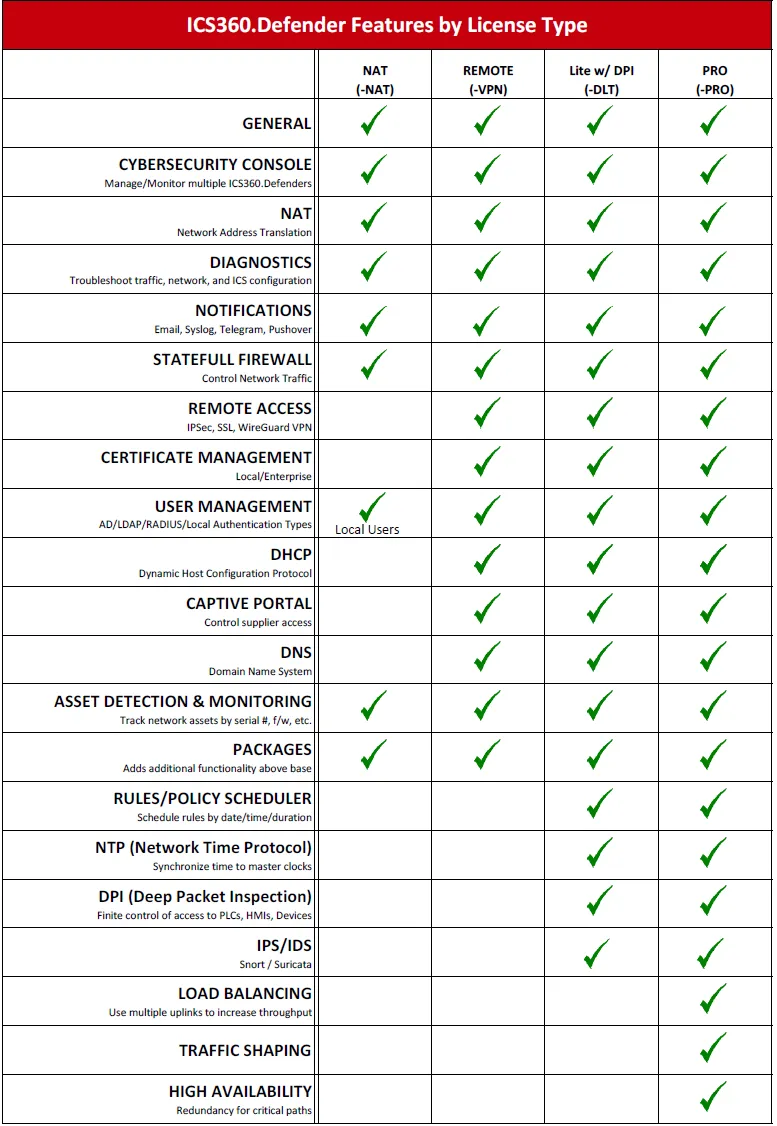
This is the layer Dynics builds ICS360 around. ICS360.Defender uses deep packet inspection built for OT protocols instead of adapted IT rulesets, giving a plant floor real-time visibility without the scanning behavior that puts a PLC at risk. Paired with a unified security console that correlates activity across the network into a single view, results get reported to teams who already have full context on the equipment they’re protecting, not a generic IT dashboard trying to make sense of industrial traffic it wasn’t built to read. It’s also worth reading through why integrated visibility and control matters for OT teams managing more than one plant.
Why IT/OT Convergence Raises the Stakes
Plants are connecting OT networks to IT infrastructure faster than most security programs can keep up with. This is where the OT vs IT cybersecurity gap gets dangerous rather than just academic. Cloud analytics, remote monitoring, and third-party vendor access all pull operational data out of what used to be an isolated environment, and every one of those connections is a potential path from the IT side of the business straight into the control systems that run the plant.
That convergence is exactly why segmentation and access control matter as much as detection. Dynics’ OT networking layer, including the software-defined OT SDN Controller, lets a plant segment its network by zone and enforce policy without slowing down legitimate traffic, while a dedicated OT identity and access management layer makes sure a third-party integrator working on one line can’t wander into the rest of the network.
This matters just as much outside the factory. Utilities managing an energy grid and municipalities running water and wastewater infrastructure are converging IT and OT under the same regulatory pressure, and a security failure in either environment carries consequences well beyond a data breach.
Frequently Asked Questions
What is the difference between OT and IT cybersecurity?
OT vs IT cybersecurity comes down to priorities. IT cybersecurity protects data confidentiality, integrity, and availability, in that order. OT cybersecurity protects uptime and physical safety first, because a failure on a plant floor can stop production or put people at risk, not just expose information.
Can IT security tools be used for OT?
Not without real changes. Most IT tools rely on active scanning and assume the target device can absorb that traffic without issue. Many industrial controllers can’t, and forcing an IT-native tool onto an OT network risks the very outages it was meant to prevent.
What protocols does OT security need to understand?
At minimum, Modbus, DNP3, and EtherNet/IP, along with protocols like Profinet depending on the plant. A security tool that can’t parse these can’t tell legitimate industrial traffic from a threat.
What is OT-native security?
Security built from the ground up for operational technology – passive and protocol-aware rather than active and scanning, and designed to respect maintenance windows instead of forcing updates on an IT schedule.
Why is availability prioritized over confidentiality in industrial environments?
Because the consequence of a failure is different. A data breach is serious, but a halted production line or a safety incident carries a different kind of cost, one measured in downtime, physical damage, or worse.
What happens when IT and OT networks converge without proper segmentation?
A threat that starts on the IT side of the business gets a direct path into control systems that were never built to detect it. That’s why segmentation, identity controls, and protocol-aware monitoring all have to work together as OT and IT networks connect.
OT vs IT cybersecurity will keep converging, and that’s not a reason to blur the line between them. It’s a reason to get the distinction right before a scanner, a patch, or an unsegmented connection makes the decision for you. Hardware built for the plant floor and security built for the same protocols running on it aren’t two separate purchases. They’re the same problem, solved by people who understand both sides of it.
For more on the standards referenced above, see CISA’s Industrial Control Systems resources, the ISA/IEC 62443 Series of Standards, and SANS’s industrial control systems security page.